![[personal profile]](https://www.dreamwidth.org/img/silk/identity/user.png) ashlyme
ashlymeFrom the start, Sean Harris is extraordinary. The corners of his mouth are permanently turned down, as if his lips have been carved that way; his eyes look sore, also pulled down: a mask that's forgotten it was a face. He walks stiff-armed, hell, he even runs that way, and you can't tell his age at all. He looks on the one hand like a schoolboy forced into a larger, gangling body, then another scene like an older man scrubbed of all experience but the worst. It's hard to tell when this is set; you don't see anyone with mobile phones or computers; it could be anytime in the last twenty-five years. His crushed puppeteer Philip is coming home, and it's the worst place he could be. You never find out what the show was like that ended his career; you can guess enough when Possum itself is finally revealed. What dialogue he has (there's not that much in the entire film) is mumbled, and a lot of that is the nursery-rhyme that encodes his past trauma (there's a quote in the subject line). Home is a council house that should have been condemned decades ago: boarded windows, flock wallpaper blackened by mould and a fire in the late seventies; home is Alun Armstrong's vile uncle Maurice. He feels like the older Steptoe, stripped of whining and gurns; he's all leering insinuation. He makes Philip repeat a story from childhood, where the boy was forced to take part in abusing an injured fox. (Foxes, playing dead or watchful from frosty verges, run through the film too; at one point, Maurice claims he's eating a roasted one.) His attempts at cameraderie are if anything worse than the goading. He offers Philip a crudded tin of roll-ups, or nods to an old jar full of gobstoppers.What's in them? The same as ever. You see Philip walking into the house again and again, calling his uncle's name; there's a satchel hanging in the hall. It could be Philip's; but who does the skipping rope belong to?
And then there's the last of the family: Possum. It's straight out of Ligotti. A knobble of body and eight legs that could have been cut from a local wood, tufted here and there with what I thought afterwards must be fox fur. It has a human mask, Philip's face, gaping with the scream he can't utter. It's utterly horrible (I went in as a confirmed arachnophobe) and pathetic at the same time. It's not all his pain; there are much worse monsters in the film. But he's always trying to destroy it, losing it in woodland, giving it to water and fire like a witch; it is always coming back, crawling onto him in his nightmares, hanging on the crudded wall of his bedroom like a thrift-shop Giger beast. Meanwhile the TV fizzes itself on and off with reports of a local schoolboy gone missing. Philip spoke to him briefly on the train back to ask What are you drawing? (Later you see his own scrapbook from 1978: the creation myth of Possum. All black balloons, spiderlegs rising over the horizon of the Fens.It's beautiful and fucking horrifying at once. Maurice finds and reads from it aloud at night. It feels like another violation of Philip.) I don't believe the film encourages us to believe Philip is behind the boy being abducted, though Maurice does his best to insinuate his suspicions. Philip approaches the local secondary school and asks to see his teacher, either long dead or retired, and the only confession he wants to make is what was done to him as a child. He calls a teacher younger than him sir. It's heartbreaking. The only embrace he gets during the film is the caress of Possum in a nightmare.
It's a film of edgelands. Even Maurice's back garden is just a riot of brambles, gone red with the dying year. Scraggy woodlands, fens with hunched footbridges, the barracks due to be knocked down that Philip keeps going to, in waking and dream. The light is either damp and rawly grey, or failing sun - light like that you don't much see onscreen, unless it's in a Ghost Story For Christmas or the public information films where kids died in strange accidents: a seventies sun. Daylight never makes it into the house, which doesn't look as if should still have electricity: the bulbs are sepia. Everything stopped in 1978, but Matthew Holness the writer isn't trying to give us any solace in nostalgia. The soundtrack is mostly original, glacial synth drones, here and there a skittering violin, or a flute that almost gives a brief warmth as the camera tracks over the fen. I'm enough of a Delia Derbyshire geek to recognise they used some of her bass-oscillator/VCS3 sounds near the end and that they come from the Doctor Who story Inferno.
Did I love Possum? I'd say yes, but love is a complicated word. What happened to Philip as a boy didn't happen to me. Without saying too much I've survived enough to know and empathise with him. And be shaken by the film. There were maybe a dozen others in the screen room with me. I came out onto the steps of the Electric* and there was a young man I recognised from the back row, who was also having a post-film smoke. He bent down to open his bag; and my God, I really was expecting to see Possum in there. I made a jittery joke of that to him. He'd found it a tough experience too, I hope not for my reasons. I walked straight to the Wellington and I was shaking all the way. The people going home from work didn't seem quite real to me; I wondered if my own mouth looked like Philip's. I was still shaking a bit when I sat down with a pint. It took me an hour's scribbling down notes on it to relax. Still, I don't regret going. The haunting was worth it.
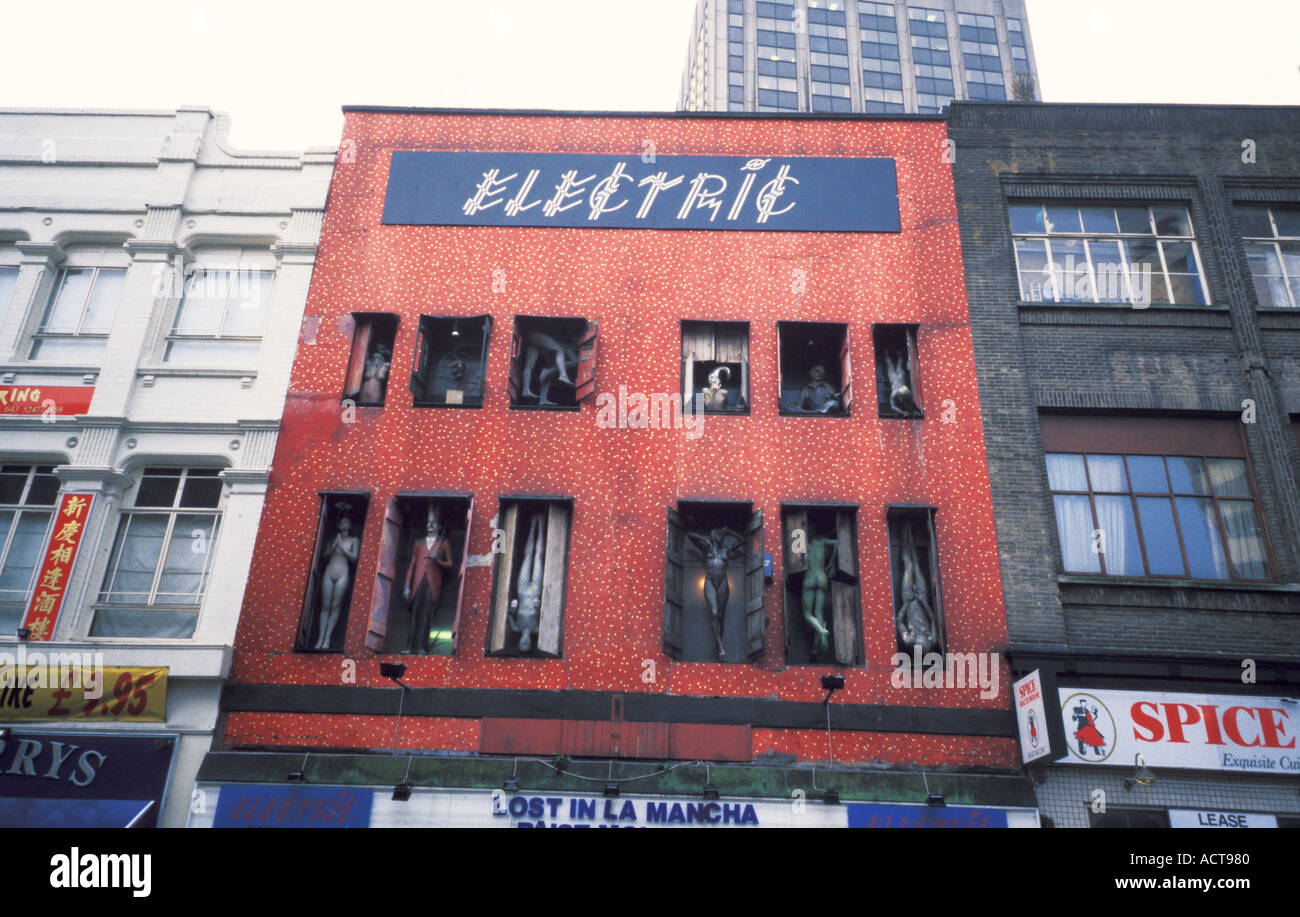
*Coincidentally, the facade of the Electric in the nineties had mannequins set in alcoves above the entrance. The set was called Thatcher's Children; nobody seems to know where they are now. Probably gathering dust in a warehouse. A not-very-good picture here:
c8.alamy.com/compes/act980/birmingham-england-electric-cinema-act980.jpg
ETA: somebody take my DD fan badge back. It's not the Inferno soundtrack that's used (though it was the placeholder before the film-makers got original music); Derbyshire's "Sea" was the track.
*Coincidentally, the facade of the Electric in the nineties had mannequins set in alcoves above the entrance. The set was called Thatcher's Children; nobody seems to know where they are now. Probably gathering dust in a warehouse. A not-very-good picture here:
c8.alamy.com/compes/act980/birmingham-england-electric-cinema-act980.jpg
ETA: somebody take my DD fan badge back. It's not the Inferno soundtrack that's used (though it was the placeholder before the film-makers got original music); Derbyshire's "Sea" was the track.
no subject
Date: 2018-11-24 06:43 am (UTC)Thank you for writing it up. You make it sound awful and wonderful, another movie like the stories I read (like the stories you write) but do not often see on a screen. I hope it shows up somewhere near me. Supposedly it's out here, but I haven't seen any signs. (That sounds ominous. I mean posters, reviews: not shadows with spider legs.)
I love that it's Derbyshire's "Sea."
no subject
Date: 2018-11-24 08:45 pm (UTC)